One month to United Nations World Wildlife Day 2026: 5 Ways to Get Involved
Geneva, 3 February 2026 – The countdown is officially on: in just one month, the world will come together to celebrate United Nations World Wildlife Day 2026 and the incredible diversity of wild fauna and flora that sustains our planet.
This year’s theme, “Medicinal and Aromatic Plants: Conserving Health, Heritage and Livelihoods,” shines a spotlight on the extraordinary plants that have supported human well‑being for centuries. It also invites us all to learn from the communities, experts and knowledge‑holders working to conserve these species and the cultural traditions surrounding them.
As we approach 3 March, there are several ways to take part in this year’s global celebration:
- Organise and register your satellite celebration activity or event on the World Wildlife Day website and share with the world how you plan to celebrate in your community.
- Download, use and share the Official WWD2026 Poster, designed by the Official Poster Contest Winner Ms Hannah Payet, and promote the theme at your event, with a virtual background, or on social media.
- Submit your film to the Jackson Wild Film Showcase, deadline extended to 11 February, to share your powerful stories about wildlife and the people conserving it.
- Use the WWD2026 Social Media Kit (coming very soon!), which contains ready-made social media assets to support your outreach leading up to or on the Day.
- Join the United Nations Celebration Event, to be livestreamed on the World Wildlife Day YouTube channel on Tuesday, 3 March 2026. Details coming soon.
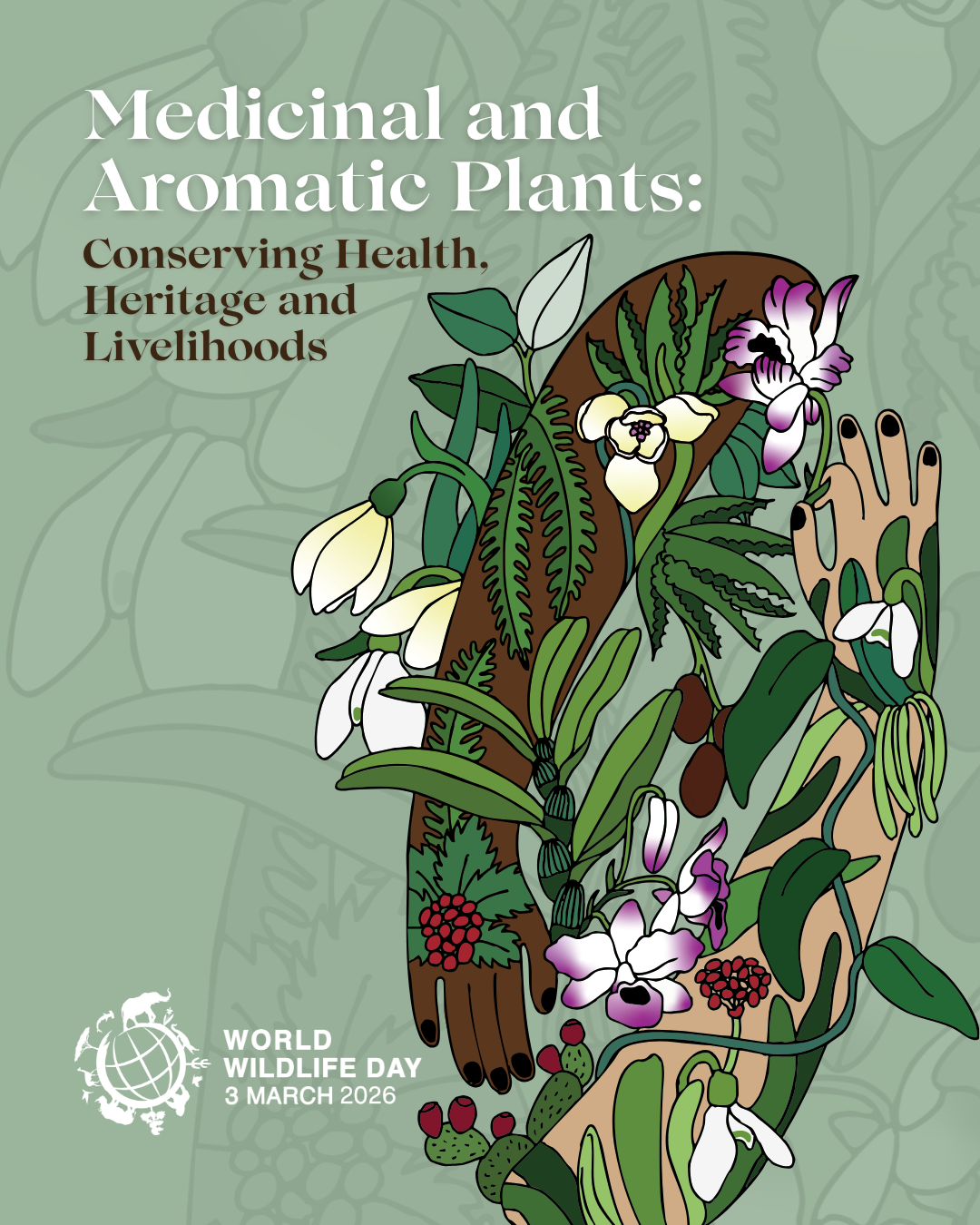
As the global celebration draws near, World Wildlife Day 2026 will invite us to rediscover the richness of medicinal and aromatic plants - plants that represent cultural heritage, and support livelihoods - hold immense value for human and planetary health. The celebration will recognise the traditional knowledge behind their use, the communities conserving these species, and our shared responsibility to ensure their conservation for future generations.
____________________
Editor’s Notes:
For enquiries, please contact [email protected]
About CITES
The Convention on International Trade in Endangered Species of Wild Fauna and Flora (CITES) was signed on 3 March 1973 and entered into force on 1 July 1975. With 185 Parties (184 countries + the European Union), it remains one of the world's most powerful tools for wildlife conservation through the regulation of international trade in over 40,900 species of wild animals and plants. CITES-listed species are used by people around the world in their daily lives for food, health care, furniture, housing, tourist souvenirs, cosmetics or fashion. CITES seeks to ensure that international trade in such species is sustainable, legal and traceable and contributes to both the livelihoods of the communities that live closest to them and to national economies for a healthy planet and the prosperity of the people in support of UN Sustainable Development Goals.
Follow CITES on social media:
Find out more: https://cites.org/eng
About the United Nations World Wildlife Day
On 20 December 2013, the 68th session of the United Nations General Assembly proclaimed 3 March as World Wildlife Day to celebrate and raise awareness of the world’s wild fauna and flora. The date is the day of the signature of the Convention on International Trade in Endangered Species of Wild Fauna and Flora (CITES) in 1973. World Wildlife Day has become the most prominent global annual event dedicated to wildlife.
For more information, follow World Wildlife Day on:
Find out more: https://wildlifeday.org/en