United Nations World Wildlife Day 2026: Medicinal and Aromatic Plants and Their Critical Role in Health, Heritage and Livelihoods
Geneva, 6 March 2026 — From herbal teas and essential oils to traditional medicines, medicinal and aromatic plants (MAPs) are woven into daily life for tens of millions of people across the globe. Today, an estimated 50,000 to 70,000 plant species are used for medicinal and aromatic purposes worldwide, supporting healthcare systems, local livelihoods and national economies. Trade in these species is worth billions of dollars annually, making sustainable and well-regulated trade more important than ever. Over 1,500 MAP species are listed under the Convention on International Trade in Endangered Species of Wild Fauna and Flora (CITES), which works to ensure that international wildlife trade is sustainable, legal and traceable.

For World Wildlife Day 2026, the United Nations makes visible the indispensable role of the 50,000–70,000 species of MAPs “to heal the world” under the theme, “Medicinal and Aromatic Plants: Conserving Health, Heritage and Livelihoods.” The theme aims to raise awareness on the species that underpin healthcare, cultural practices, food, cosmetics and wellbeing industries – and the growing pressure they face from unsustainable harvesting, illegal trade adding to the crisis of biodiversity loss.
This year’s WWD2026 United Nations Celebration was held online by the CITES Secretariat, in partnership with the Geneva Environment Network, TRAFFIC, the IUCN Species Survival Commission’s Medicinal Plant Specialist Group, the United Nations Development Programme (UNDP), the International Fund for Animal Welfare (IFAW) and Jackson Wild. The event brought together CITES Signatory Party experts, high-level representatives of international organizations, industry stakeholders, Indigenous and local community leaders and youth network members.
Opening the celebration, the event host, Ms Ivonne Higuero, SecretaryGeneral of CITES, said: “As we gather today, across countries and continents, we are reminded of our shared responsibility to conserve the natural world—its beauty, its diversity, and the essential services it provides to humanity. This year’s theme shines a spotlight on MAPs, species that sustain livelihoods, support traditional knowledge, and contribute to global health and wellbeing. Millions around the globe are celebrating this day, each in their own unique way, and we are honoured to mark it together with you, especially as we highlight the vital importance of MAPs.”
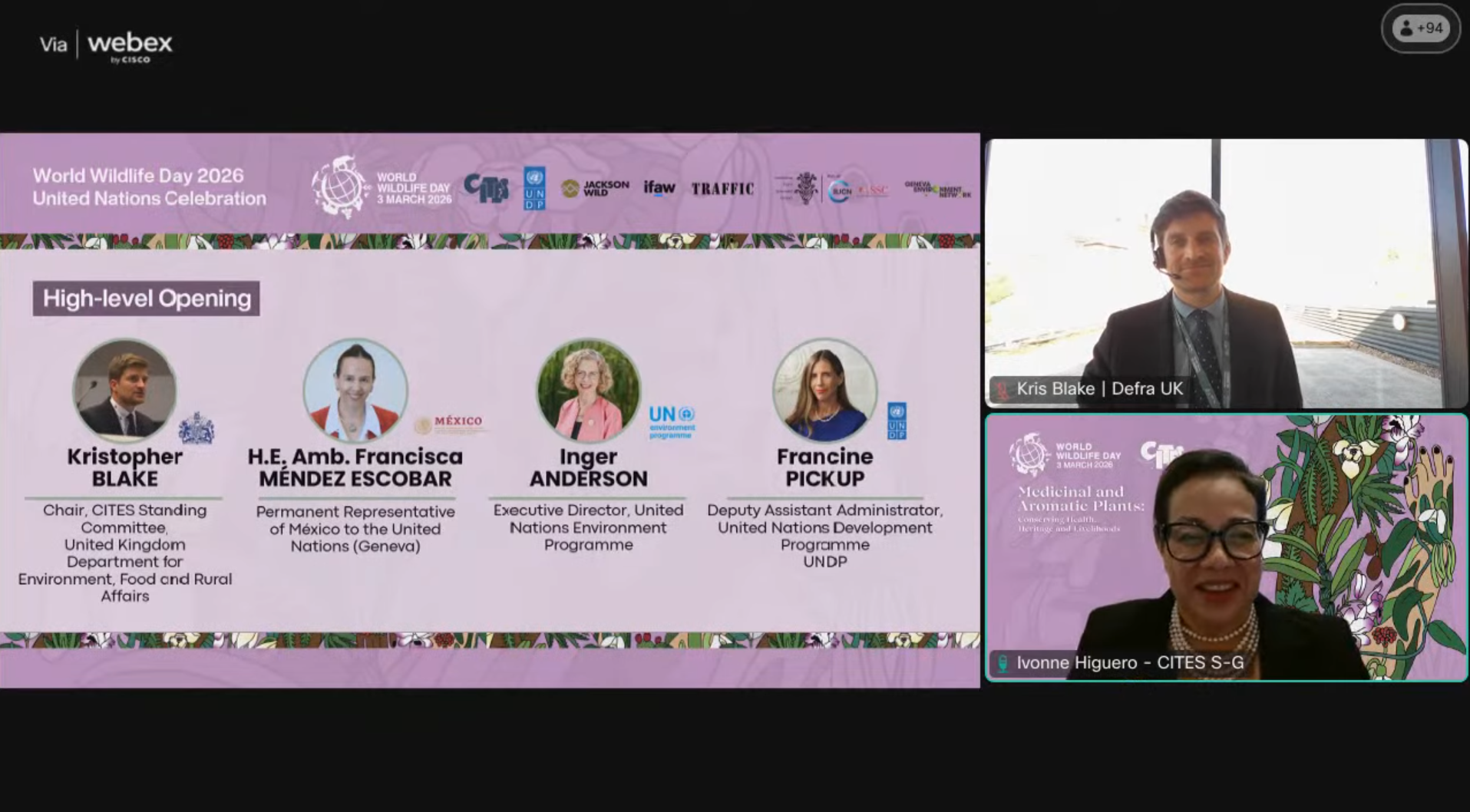
Highlevel opening speakers echoed this message, underscoring the need for responsible management, benefit‑sharing and community empowerment.
Mr Kristopher Blake, Chair of the CITES Standing Committee, representing the CITES Management Authority of the United Kingdom of Great Britain and Northern Ireland, said: “Aromatic plants, and fungi too, are right at the intersection between local livelihoods and the communities that they support, conservation science, human culture, environmental governance, as well of course as species and ecosystem conservation itself. All of which require ongoing close cooperation at local, regional and global levels between sectors and people of all backgrounds.”
H.E. Ms Francisca Méndez Escobar, Permanent Representative of Mexico to the United Nations in Geneva, said: “For many rural communities, harvesting and cultivating these plants is a vital source of income and a pathway into local and international markets. Candelilla, a wax producing desert plant found only in Mexico and regulated under CITES Appendix II, is one such examples. Thousands of people across its value chain depend on the responsible management of this species.”
Ms Inger Andersen, Executive Director of the United Nations Environment Programme, said: “This year's focus on ‘nature's pharmacy’ is so critical, because medicinal and aromatic plants are essential, not just for our health, but also for our heritage and our very livelihoods, and for many people, their very identity. We need to reinforce our collective responsibility to planet Earth.”
Ms Francine Pickup, Deputy Director of the Bureau for Policy and Programme Support and Deputy Assistant Administrator of UNDP, said: “Preserving these unique plants means safeguarding the traditions, knowledge, and resources that empower communities. These plants open doors for local opportunities, supports rural growth, and inspire young people. They also hold the keys to future innovations, and potential cures for diseases yet to be discovered.
Adding a musical dimension to the event opening, Dr Helen Anahita Wilson, composer, sound artist and Wellcome Trust Fellow at King’s College London, captivated the audience by live-transforming the bioelectrical signals of medicinal and adaptogenic plants into music.
As part of the annual collaboration with the United Nations Postal Administration, the CITES Secretary-General launched the 2026 United Nations Endangered Species Stamps which, for the first time since its first edition in 1993, features all CITES-listed MAPs.
Expert lightning talks on specific MAPs in trade followed. Dr Rita Engel of the University of Veterinary Medicine of Budapest, on behalf of the CITES Management Authority of Hungary, highlighted the significance of Chamomile (Matricaria chamomilla) as an economic asset and cultural treasure. Dr Melesse Maryo of the Ethiopian Wildlife Conservation Authority, the CITES Management Authority of Ethiopia, underscored the urgent need for sustainable harvesting ethics in key ranges of Frankincense (Boswellia papyrifera). Ms Kalpana Sharma Dhakal of the Department of Plant Resources, one of the CITES Scientific Authority of Nepal, emphasized that sustainable trade of Jatamansi (Nardostachys jatamansi), strategic cultivation and natural habitat regeneration are critical for supporting rural livelihoods. Of behalf of CONABIO, the CITES Scientific Authority of Mexico, Dr Tim Synnott, former Executive Director of the Forest Stewardship Council, stressed the importance of certification to provide assurance that plants such as Candelilla (Euphorbia antisyphilitica) are sourced and managed responsibly.
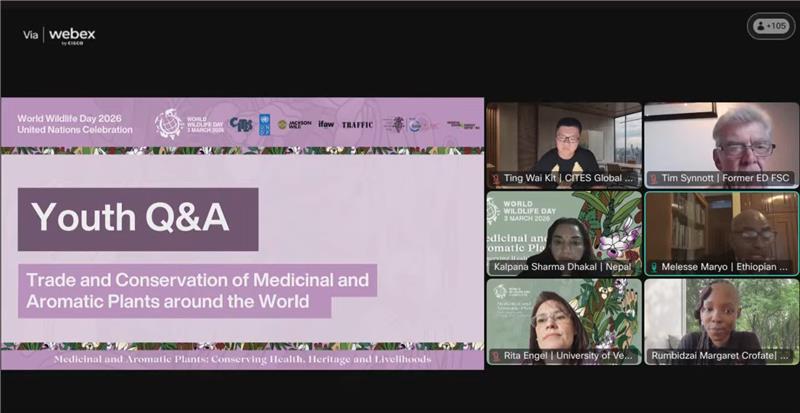
Following the talks, the moderator of the segment, Mr Ting Wai Kit, Co-Founder of the CITES Global Youth Network (CGYN) and Youth Executive of Mandai Nature, invited CGYN members, Mr Pasindu Dilshan Abegunawaradhana of Sri Lanka, Ms Rumbidzai Margaret Crofate of Zimbabwe and Ms Frankie Moorman of the United Kingdom, to ask the speakers about balancing conservation and livelihoods, prioritizing collaboration across supply chains, and bridging the gap for youth to be leaders in value-added commercialization.
The event then turned to statements from CITES Parties. H.E. Dr. Linkham Duangsavanh, Minister of Agriculture and Environment of the Lao People’s Democratic Republic, reaffirmed the nation’s commitment to working with the international community to conserve MAPs. H.E. Dr Ahmed Omar Mohamed, State Minister of Environment and Climate Change of Somalia, stressed the importance of MAPs to Somalia’s heritage and rural economy. Ms Célia de Lavergne, Director of Water and Biodiversity of France, called for reasonable and responsible consumption of the planet’s natural resources.
The final expert segment of the programme welcomed talks by stakeholders from along the value chain of MAPs in trade. Ms Emma Williams of the Royal Botanic Gardens, Kew, described the scientific contributions of the United Kingdom in regulating the global plant trade and managing the Medicinal Plant Names Services. Kichwa Indigenous Spiritual Guide, Ms Neida Delia Andi Arimuya of the Amazonian Ecuador delivered a powerful testimony on the direct and spiritual relationship between Indigenous Peoples and forests, and home to Guayusa (Ilex guayusa). His Majesty Mvondo Bruno, President of ReCTrad, underscored the leadership role of traditional authorities in stewarding the conservation of African cherry tree (Prunus africana) and White ginger (Mondia whitei) in Cameroon. Ms Elisa Aragon of Nelixia shared how sustainable forest management can generate economic value and conserve Gaiacwood (Bulnesia sarmentoi) in Paraguay. Ms Jamie Horst of Traditional Medicinals highlighted the importance of traceability in supporting rural livelihoods and climate resilience for communities relying on MAPs around the world.
The celebration continued with the reveal of the selected films of the World Wildlife Day 2026 Jackson Wild Film Showcase by Ms Christie Quinn, Executive Director of Jackson Wild, and the announcement of winners and finalists of the World Wildlife Day 2026 IFAW Youth Art Contest, by Mr Azzedine Downes, President and CEO of IFAW.
Closing the event with takeaway messages, Dr Grethel Aguilar, Director General of the International Union for Conservation of Nature and Natural Resources (IUCN), said: “Solutions must extend beyond conservation alone. Ensuring sustainability requires collaboration across entire value chains – from local harvesters and Indigenous knowledge holders to researchers, policymakers, traders and consumers.”
In his closing takeaway message, Mr Richard Scobey, Executive Director of TRAFFIC, said: “Sustainable trade of medicinal and aromatic plants can deliver real and lasting change for communities and ecosystems around the world. Now more than ever, we need to work together to make trade work for people and the planet.”
Beyond the UN observance, the CITES Secretariat supported celebrations organized by partners in Geneva, Switzerland and New York, United States of America.
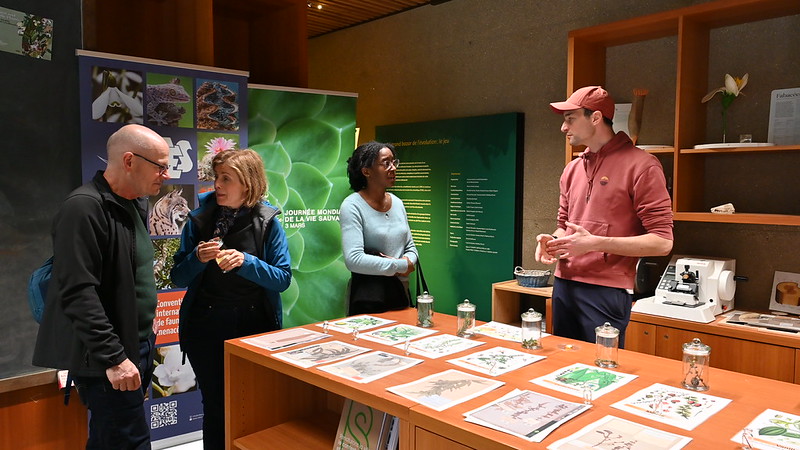
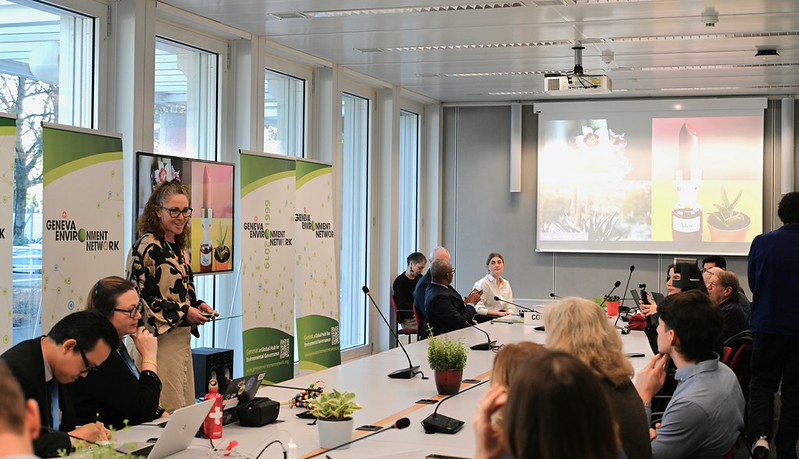
In Geneva, the Conservatory and Botanical Gardens of Geneva invited visitors to engage in a series of interactive activities exploring MAPs used in fragrances and for scientific research. At the International Environment House (IEH), the Geneva Environment Network convened leading MAP experts from the International Geneva area with a dedicated session of lightning talks exploring on the latest research, policy developments and conservation strategies related to MAP use and trade, interspersed with exhibition booth networking.
Opening the IEH celebration, H.E. Amb. Julien Thöni, Deputy Permanent Representative of Switzerland to the United Nations in Geneva, said: “Conserving medicinal and aromatic plants is not a luxury. It is a necessity, for health, our heritage and the generations to come.”
World Wildlife Day 2026 highlighted the vital role of medicinal and aromatic plants in supporting livelihoods, cultural heritage, economic opportunity and human wellbeing. Need for science-based management, equitable benefit sharing and respect for Indigenous knowledge and strong collaboration came through clearly across the global celebration events. This year’s call to conserve ‘nature’s pharmacy’ reinforces our shared responsibility to ensure the sustainable, legal and traceable use and trade of these plants so they can continue to support communities, ecosystems and future generations.”
____________________
Editor’s Notes:
For media enquiries, please contact [email protected]
For general enquiries, please contact [email protected]
About CITES
The Convention on International Trade in Endangered Species of Wild Fauna and Flora (CITES) was signed on 3 March 1973 and entered into force on 1 July 1975. With 185 Parties (184 countries + the European Union), it remains one of the world's most powerful tools for wildlife conservation through the regulation of international trade in over 40,900 species of wild animals and plants. CITES-listed species are used by people around the world in their daily lives for food, health care, furniture, housing, tourist souvenirs, cosmetics or fashion. CITES seeks to ensure that international trade in such species is sustainable, legal and traceable and contributes to both the livelihoods of the communities that live closest to them and to national economies for a healthy planet and the prosperity of the people in support of UN Sustainable Development Goals.
Follow CITES on social media:
Find out more: https://cites.org/eng